The Aesthetics of Plato’s Forms: Is Beauty Objective or Subjective?
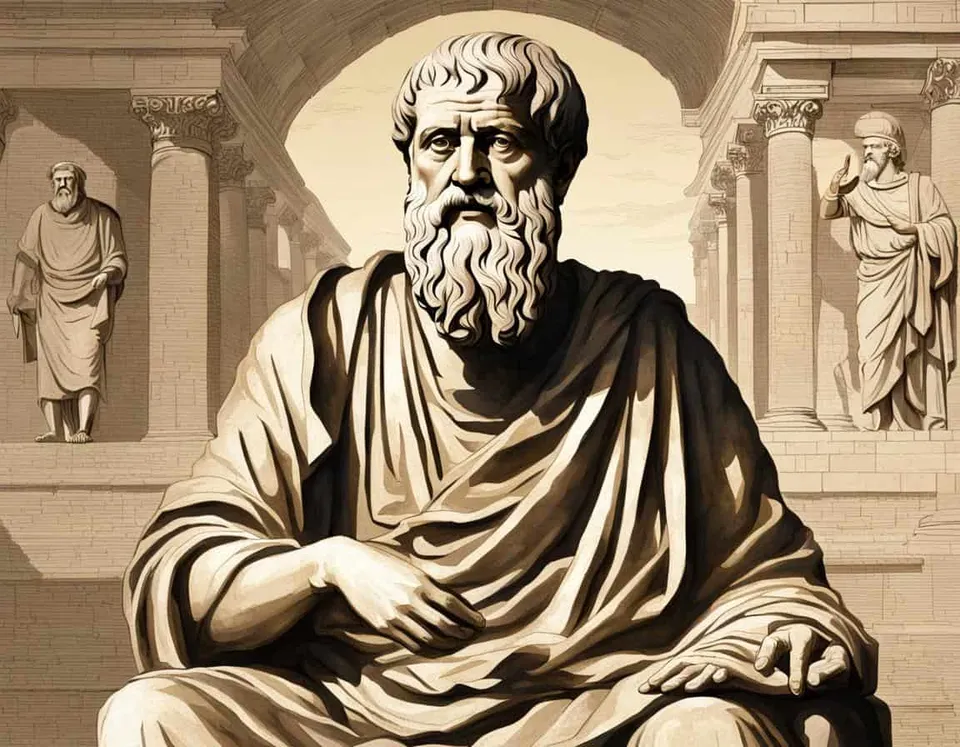
In short. Introduction Plato’s theory of Forms suggests that beauty, like all abstract concepts, exists as an immutable and perfect Form.
Introduction
Plato’s theory of Forms suggests that beauty, like all abstract concepts, exists as an immutable and perfect Form. This raises a critical philosophical question: is beauty an objective truth or a subjective experience shaped by perception? This article explores Plato’s conception of beauty, its implications for aesthetics, and how modern perspectives engage with the debate on objectivity versus subjectivity in the realm of beauty.
Plato’s Theory of Forms and Beauty
In The Republic and Symposium, Plato argues that beauty is not merely in the eye of the beholder but an eternal and unchanging Form. He posits that all beautiful objects share in this higher reality, though imperfectly. For Plato, true beauty transcends individual perception and exists independently of human opinion. This view implies that aesthetic judgments can be more than personal preferences—they may align with an objective reality.
The Subjective Experience of Beauty
Despite Plato’s argument for objective beauty, critics highlight the deeply personal nature of aesthetic experience. Modern philosophy and psychology suggest that cultural background, personal taste, and emotional states heavily influence perceptions of beauty. Thinkers such as David Hume and Immanuel Kant argue that while beauty may have shared principles, it ultimately relies on subjective human experience rather than an external metaphysical reality.
Reconciling Objectivity and Subjectivity in Aesthetics
Contemporary discussions on aesthetics often attempt to bridge the gap between objectivity and subjectivity. Some scholars propose that while beauty has universal aspects—such as symmetry and harmony—its appreciation varies among individuals. Neuroscientific studies also suggest that human brains respond consistently to certain patterns and compositions, lending partial support to Plato’s claims. However, the role of cultural and individual variation complicates the notion of absolute beauty.
Contemporary Relevance
The debate over beauty’s nature persists in fields ranging from art and design to moral philosophy. In an era dominated by digital media and diverse cultural influences, understanding whether beauty is an inherent quality or a social construct remains crucial. Plato’s theory of beauty continues to inform discussions on artistic standards, design principles, and the nature of aesthetic experience.
Plato’s notion of beauty as an objective Form remains a foundational idea in aesthetic philosophy. However, the interplay between universal principles and individual perception complicates the issue. Whether beauty is an eternal truth or a personal construct, its significance in human experience ensures that the question remains relevant in philosophical and artistic discourse.