Plato’s Timaeus and Cosmology: Bridging Myth and Natural Science
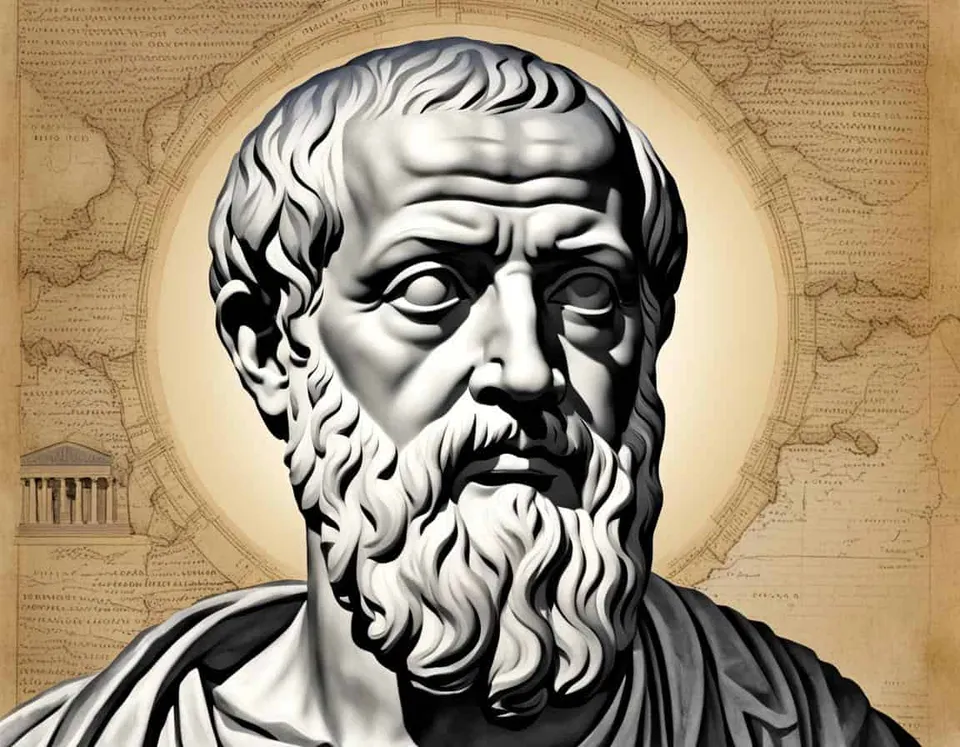
In short. Introduction Plato’s Timaeus presents a unique synthesis of myth and natural science.
Introduction
Plato’s Timaeus presents a unique synthesis of myth and natural science, offering a cosmological account that seeks to explain the universe’s creation and structure. The dialogue blends metaphysical speculation with early scientific reasoning, proposing a rational order governed by a divine craftsman, the Demiurge. This article examines Timaeus’ cosmological vision, its philosophical implications, and its enduring influence on both ancient and modern thought.
The Role of the Demiurge and Cosmic Order
In Timaeus, Plato introduces the concept of the Demiurge, a benevolent creator who imposes order on pre-existing chaos. Unlike a traditional deity, the Demiurge does not create ex nihilo but arranges the cosmos according to mathematical and geometric principles. The universe, therefore, reflects an inherent rationality, where forms and numbers govern the physical world. This notion foreshadows later developments in mathematical physics and the search for universal laws.
Elements, Forms, and the Nature of Reality
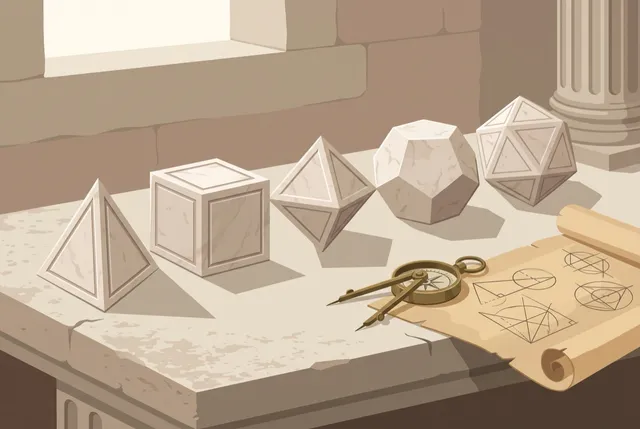
Plato’s cosmology is deeply connected to his theory of Forms. The physical world is an imperfect copy of the eternal realm of Forms, mediated by mathematical structures. Timaeus also introduces the concept of the four elements—earth, water, air, and fire—as fundamental building blocks, each made of one of the five Platonic solids, anticipating early scientific attempts to classify matter. The dialogue suggests that understanding the universe requires both metaphysical insight and empirical observation.
Bridging Myth and Science
One of the most intriguing aspects of Timaeus is its fusion of mythological storytelling with rational inquiry. While the cosmology is framed as a likely story (eikos logos), it serves as a philosophical model rather than a literal account. This dual approach influenced later thinkers, including Neoplatonists, Renaissance scholars, and even modern physicists contemplating the mathematical nature of reality.
Contemporary Relevance
Plato’s Timaeus continues to inspire discussions in philosophy, science, and theology. Its vision of an ordered, rational universe resonates with contemporary scientific exploration, from theoretical physics to the philosophy of quest wisdom mathematics. The dialogue challenges readers to consider the relationship between abstract principles and observable reality, a debate that remains central to both science and metaphysics.
Plato’s Timaeus offers a profound synthesis of myth and reason, bridging ancient cosmology with modern scientific inquiry. By presenting a universe governed by rational principles, it lays the groundwork for future philosophical and scientific exploration. Whether viewed as speculative mythology or an early scientific hypothesis, Timaeus remains a cornerstone in the history of ideas, prompting ongoing reflection on the nature of reality and the origins of the cosmos.
Keep reading