Plato's political philosophy
The just city, the philosopher king, and Plato's quarrel with democracy.
Plato watched a democracy execute the best man he knew, and never forgave it. Out of that came the most provocative proposal in political philosophy — the philosopher king — along with a critique of democracy that reads uncomfortably well, and the noble lie, an idea politics has never stopped using.
The essays here work through the just city argument by argument, and ask which of Plato's warnings we are currently ignoring.
The Republic
Plato's main political work is the Republic. Start with our book-by-book summary of the Republic and why the Republic is worth reading. The argument is driven by its characters: Cephalus, the old man who opens the dialogue, Thrasymachus, who attacks Socrates in Book 1 and Glaucon, Plato's brother and the chief questioner.
The philosopher king
Plato argues that the just city must be ruled by philosophers. Read what a philosopher king is and how the idea is used in leadership theory today.
Democracy and its critics
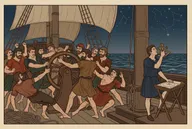
Plato distrusted democracy. See Plato's critiques of democracy and why he was sceptical about it.
The noble lie and the ideal state
The just city of the Republic rests on a founding myth. Read the noble lie and the myth of the metals, what the ideal state is according to Plato, the role of women in the Republic and his views on slavery.
The other political dialogues
Plato returned to politics after the Republic. See how the Laws differs from the Republic and the Statesman on the art of governing. The much earlier Crito asks what a citizen owes the state.
Plato's political influence
For what came after, read how Plato's philosophy shaped political thinking.
Common questions
What is a philosopher king?
In the Republic it is a ruler who loves wisdom and has been trained in philosophy. Plato argues that a city will only be just when such people rule it.
Why did Plato distrust democracy?
He saw it as rule by the uninformed, open to flatterers, and argued in the Republic that its unchecked freedom tends to end in tyranny. A democratic court had also sentenced Socrates to death.
What is Plato's noble lie?
It is the founding myth that the rulers of the just city tell every citizen in the Republic (414b–415d), so that people accept their class and treat one another as kin.
All 9 essays in Politics